
COP31 in brief: where things stand on day five
The 31st UN climate conference, known as COP31, opened on Monday 9 November 2026 at the Antalya EXPO Center on Türkiye’s Mediterranean coast and is scheduled to close on Friday 20 November. UN News reported that more than 90,000 people were expected to pass through the venue. Delegations from nearly 200 countries are there. At the leaders’ summit on 11 and 12 November, around 40 leaders spoke on the first day and about 25 on the second, according to Climate Home News. At the time of writing, in the early hours of Friday 13 November Riyadh time, the speeches are over and the negotiators have the rooms to themselves again.
This is not a conference built around one headline treaty. The hosts call it an “implementation COP”: the job is to turn promises already made in Dubai in 2023, Baku in 2024 and Belém in 2025 into money, institutions and projects. That sounds technical, and much of it is. Yet the same fault lines run through every technical item. How much finance will rich countries provide, and on what terms? How fast should the world move away from oil, gas and coal? And who should pay for the damage that is already happening?
For Arab readers these questions are not distant. The Arab Group is one of the most active blocs in the talks, Saudi Arabia is one of the most closely watched delegations, and Egypt speaks both as a former COP host and as a country exposed to heat, water stress and a vulnerable coastline. This guide sets out what is confirmed, what each side is asking for and what to watch before the closing gavel. Sections marked “analysis” are the Vemetto Editorial Team’s own reading. They are not reported facts.
An unusual double presidency and a decision drafted in the open
COP31 has two presidents, which is a first. Under a compromise reached at COP30 in Belém, Türkiye hosts the conference and holds the formal presidency through its environment minister, Murat Kurum. Australia’s climate and energy minister, Chris Bowen, serves as “President of Negotiations” and runs the formal talks in consultation with Ankara. The arrangement ended a long standoff between the two countries, both of which had bid to host the 2026 conference. A pre-COP meeting was held in Fiji in October to give Pacific island states a stronger voice, as Daily News Egypt’s summary of the set-up notes.
The bigger procedural novelty is how the conference’s headline text is being written. Most COPs end with a “cover decision”, a political text that carries the summit’s main message. It usually appears late, often in the final night. This time Bowen told the opening plenary that the presidencies would develop a “Presidency-initiated, Party-driven” decision throughout the two weeks, rather than springing it at the end. According to the Earth Negotiations Bulletin (ENB), he said the presidency would consult heads of delegation and ministers, publish a high-level summary by Friday 13 November and accept written inputs from countries until Saturday 14 November. Climate Home News expects a first draft to appear soon after that deadline.
The open approach has drawn pushback. ENB recorded that Russia asked on the first day how such a decision could be agreed without a dedicated agenda item, and Kurum replied that the presidency would not impose any decision. Climate Home News, citing people familiar with the consultations, reported that Russia, Saudi Arabia and the Like-Minded Developing Countries, a group that includes China and India, have questioned whether the process is legitimate and whether a cover decision is needed at all. Analysts quoted by the outlet said it was too early to tell whether this was a real red line or early negotiating leverage.
The backdrop: a world heading past 1.5°C
The science that frames Antalya is bleaker than at any earlier COP. Reuters reported that a UN Environment Programme (UNEP) report published in October found the world on course to break through the 1.5°C warming limit that countries agreed to pursue under the 2015 Paris Agreement. ENB noted the mood in the corridors on day one. Several participants called this “the first COP where we admit the world will exceed 1.5°C”.

UN Secretary-General António Guterres opened the leaders’ summit with that warning. According to UN News, he told leaders that even if current national plans were fully implemented, the planet would still be heading for more than 2.5°C of warming by the end of the century. He insisted that overshooting 1.5°C was no reason to give up, because every fraction of a degree avoided still matters. “It’s make or bake time,” he said, a line UN News reported verbatim.
Extreme weather in 2026 has made the stakes concrete. Reuters cited a series of severe heatwaves in Western Europe and a glacier collapse in Nepal that triggered a catastrophic flood, killing more than 1,450 people and leaving thousands missing. Nepal, Bhutan and other mountain states failed to win a standalone agenda item on mountains, according to UN News and ENB. The presidency instead promised consultations and a series of dialogues in 2027 and 2028. Their demand for protection of glaciers and mountain communities is now one of the issues countries want reflected in the cover decision.
The overshoot itself is becoming a negotiating issue. Climate Home News reports that many small island and European states want the cover decision to respond strongly to it. The same outlet quotes an E3G analyst as saying that some countries, including Saudi Arabia, are questioning the science behind UNEP’s overshoot and emissions-gap reports. If that holds, even the description of the problem may be contested in the final text.
What is actually on the negotiating table
Bowen told the opening plenary that this year’s agenda carries more than 160 items and some 60 substantive negotiating mandates. In practice, five clusters will decide whether Antalya is judged a success.
Climate finance and access. At COP29 in Baku, countries set a goal of at least $300 billion a year in climate finance for developing countries and a wider aim of $1.3 trillion a year from all sources by 2035, as SciDev.Net recalled at the opening. Developing countries say the money is too slow, too hard to reach and too often loans rather than grants. Bowen’s own speech put it bluntly: the countries that need climate finance most are getting it least. A climate finance work programme won a place on the agenda after pressure from developing countries. Even backward-looking questions are disputed. According to ENB, developed countries want the decision to recognise that the old $100 billion goal was met in 2022, 2023 and 2024. The African Group, the LMDCs and the Arab Group objected that delivery fell short in 2020 and 2021.
Adaptation and its money. This is where the first fight of the conference broke out. The African Group asked for a standalone agenda item on tripling adaptation finance by 2035, a goal agreed at COP30 under what is known as the Global Mutirão decision. The request was not adopted. The COP31 president ruled that the topic would be handled under other agenda items, as ENB and AFP reported. RFI reported that the EU had signalled before the summit that it would not accept a separate item. The African Group now wants the goal prioritised in the cover text, with a clear baseline and timeline.

The numbers show why the baseline matters. RFI, citing UNEP’s Adaptation Gap Report 2026, reports that international public adaptation finance from developed to developing countries was between $28.2 billion and $31.7 billion in 2024, up only about $1 billion on the year before. If the tripling is measured from the Glasgow baseline, flows would reach roughly $85 billion to $120 billion a year by 2035. Even that, the report says, would cover only 20 to 29 per cent of developing countries’ adaptation needs in that year.
Emissions cuts. Under the Mitigation Work Programme, ENB reports broad support for continuing the programme, but no agreement on its end date. Proposals range from 2030 to 2040, and Peru wants no fixed end at all. A Swiss proposal for a permanent mitigation committee was opposed by Egypt, Saudi Arabia and others.
A just transition. Negotiators are working to make operational a just transition mechanism, which aims to help workers and communities as economies change. ENB reports broad support for continuing the related work programme beyond 2026.
Carbon markets and adaptation goals. Parties are also discussing how to fund the infrastructure behind cooperative carbon-market approaches under Article 6.2 of the Paris Agreement. They are also discussing a technical taskforce for the Global Goal on Adaptation and the final transition of the Adaptation Fund to serve the Paris Agreement.
Türkiye’s big idea: electricity to 35% of energy by 2035
The host country’s signature initiative is the “35-by-35 Global Electrification Pledge”. Its text is published on the official COP31 website. It is a voluntary declaration whose participants intend to raise electricity’s share of total final energy consumption to 35 per cent worldwide by 2035. The text cites analysis from the International Energy Agency (IEA) and the International Renewable Energy Agency (IRENA). According to that analysis, pathways consistent with 1.5°C need electricity to reach around 35 per cent of final energy by 2035 and more than half by 2050. Reuters puts the current share at a little over 20 per cent.
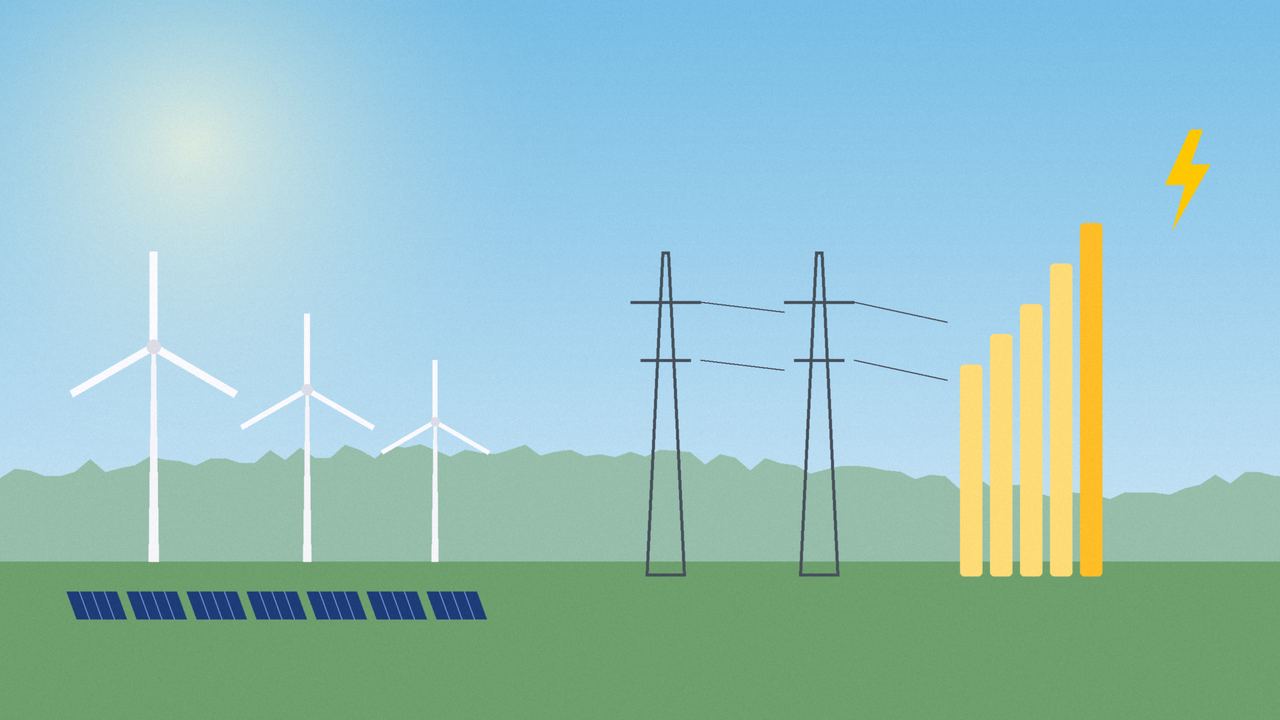
The logic is straightforward. Electric heat pumps, buses, cars and industrial processes can cut emissions as power grids get cleaner, while grid upgrades and storage absorb the extra demand. The pledge commits participants to stronger grids, storage and system flexibility, more accessible finance for developing countries, and agreement on a way to review collective progress using existing IEA and IRENA reporting. It also states that each participant keeps full authority over its own electrification policies, and that pathways will differ by national circumstances.
Support has come from several directions. Reuters, carried by CNA, reported that European leaders lined up behind the electrification proposal and that Britain’s prime minister backed it in his speech. The UN climate chief, Simon Stiell, told the opening plenary that progress on electrification and methane together could take up to half a degree off projected warming, according to ENB.
Critics have a pointed objection. Reuters reported that Türkiye has not specified whether the extra electricity would have to be renewable, and that some critics say the goal may do little to curb warming without a clearer plan to reduce fossil fuel use. That gap is exactly why the pledge is politically convenient for a wide range of countries. Oil and gas producers can sign up to more electricity without endorsing less oil.
The fault line: fossil fuels, producers and the most vulnerable
Two days of leaders’ speeches laid out the divide plainly. Reuters, as carried by CNA, summarised it this way. Small island states pleaded for urgent emissions cuts. European leaders lined up behind expanding electrification. Developing countries asked for more finance. Fossil fuel producers argued that oil, gas and coal should continue to be used. UN News described the same split inside the negotiating rooms, with small islands pressing for faster cuts and fossil-fuel-producing countries defending their development priorities.

The Arab Group took a firm line from the first day. ENB records that on 9 November the group opposed references to the COP30 presidency’s roadmaps and to the Action Agenda in any decision. One of those roadmaps sets out how to transition away from fossil fuels and another covers halting deforestation. In the same statement the group called for the Adaptation Fund to serve the Paris Agreement exclusively, without politicisation, and for a decision committing countries to end unilateral trade measures. In UN climate debates, that phrase usually refers to measures such as carbon border adjustments. In separate talks on the annual stocktake dialogue, ENB reports that the Arab Group, the LMDCs and the African Group opposed adding “key messages” to the draft decision. They argued this would go beyond the dialogue’s mandate.
Saudi Arabia’s energy minister, Prince Abdulaziz bin Salman, addressed the leaders’ summit on 11 November. Reuters reported that he argued the current geopolitical situation shows why the free flow of all types of energy matters. He said measures to protect the climate should not become barriers that stop countries from achieving economic development.
On the other side stand the small island states and much of Europe. At the leaders’ summit, leaders from the Bahamas, Tuvalu, Solomon Islands and Saint Lucia called for swift action, Reuters reported. The EU told the opening plenary that it welcomed a decision that addresses overshoot, supports clean electrification, cuts methane and carries forward the existing roadmaps. Methane has become a test of its own. Climate Home News reports that France wants the cover decision to call on oil and gas companies to cut methane intensity to near zero by the end of the decade and to eliminate gas flaring and venting. Australia said it would sign a voluntary pledge on near-zero methane in the fossil fuel sector.
Guterres’s “climate justice compact” and the money behind it
The UN Secretary-General used the summit to propose what he called a climate justice compact. UN News lists its four priorities. The first is to accelerate the transition away from fossil fuels through national plans that protect workers and communities while expanding renewables. The second is to protect vulnerable people with early warning systems, stronger adaptation and faster support after disasters. The third is to deliver affordable climate finance, with wealthy countries meeting their commitments. The fourth is to strengthen cooperation across trade barriers, technology gaps and geopolitical rivalries.
The sharpest part of the speech was about who pays. According to UN News, Guterres contrasted $95 billion in profits earned by the world’s nine largest oil companies in a single quarter with roughly $600 million received by the international fund that helps vulnerable countries recover from loss and damage. That, he said, equals about 14 hours of those companies’ profits. He urged governments to tax windfall profits, and his line “Polluters must pay” drew an ovation in the plenary. He also asked UNEP to develop a global standard for near-zero methane emissions from oil and gas. UN News reports he noted that only about one in eight of the more than 5,000 methane-leak alerts issued since 2023 has received a response.
Some new money has appeared, though it is small next to the needs. UN News reports that philanthropic organisations announced more than $480 million to cut methane and other powerful greenhouse gases. Solomon Islands pledged $400,000 to the Green Climate Fund, the first small island developing state to contribute to a replenishment cycle. Türkiye secured a $1.6 billion financing agreement with the Asian Infrastructure Investment Bank for climate reforms, clean energy and resilience.
An empty American seat and a thin G7 presence
For the second year in a row, the United States has no official delegation at the talks. Reuters reports that it stayed away after President Donald Trump withdrew the country from climate cooperation following his return to office in 2025. The absence matters for arithmetic and for diplomacy. The US is the largest historical emitter, and its negotiators traditionally carried outsized weight on finance and on the wording of final texts. American voices are still present, through members of Congress, businesses and a civil-society pavilion called “America is All In”, as NBC News and Climate Home News report. None of them can negotiate on behalf of the US government.
Washington is not the only gap. Reuters noted that the top leaders of France, Germany, Japan, Italy and Canada also did not attend this year. Climate Home News counted around 40 leaders speaking on the first day of the summit and about 25 on the second. Brazil’s president warned that climate change was slipping down the global agenda as wars and trade disputes took over. Reuters reported that wars, including the conflict involving Iran that has disrupted oil shipments in the region, and inflation have pushed climate concerns down many governments’ priority lists.
Analysis. The US absence cuts two ways for the Gulf. On one hand, Saudi Arabia and its allies face less pressure from a major developed-country delegation, a point the Guardian made before the conference. On the other, the job of brokering compromises now falls more heavily on Australia, the EU and large emerging economies. That could make any final text more cautious, but also more dependent on deals struck directly with the Arab Group.
What it means for Saudi Arabia, the Gulf and Egypt
Several confirmed developments at Antalya already concern the region directly. On 10 November, on the conference sidelines, Saudi Arabia and Türkiye signed a memorandum of understanding on cooperation in electricity projects, according to Asharq Al-Awsat and the Saudi Press Agency. The memorandum builds on a renewable-energy agreement signed on 3 February that entered into force on 21 October. That agreement provides for 5,000 megawatts of renewable capacity in Türkiye, developed by ACWA Power in two phases of 2,000 and 3,000 megawatts. The second phase includes wind farms backed by high-voltage direct-current transmission and battery storage.
Egypt was represented at the leaders’ summit by Manal Awad, its minister of local development and environment, on behalf of President Abdel Fattah al-Sisi, Daily News Egypt reported. She set out four priorities for real implementation: expanding clean electricity, moving away from fossil fuels, affordable climate finance for developing countries and stronger resilience to warming. Egypt, which hosted COP27 in Sharm el-Sheikh in 2022 where countries agreed to set up a loss-and-damage fund, also sits with Saudi Arabia among the countries that opposed a permanent mitigation committee, according to ENB.
Analysis. These facts suggest the region is not a single bloc on every question, even when the Arab Group speaks with one voice in the negotiating room. Large oil and gas exporters have a strong interest in keeping fuel-specific language, such as roadmaps for transitioning away from fossil fuels, out of binding or semi-binding texts. At the same time they are investing heavily in renewable power and grids at home and abroad, as the Saudi-Turkish memorandum shows. This dual track allows Riyadh to sign up to electrification and clean-power projects while resisting texts that target oil demand directly.
Analysis. For Egypt and other Arab countries with lower incomes, the priorities lean towards adaptation finance, water and food security, and loss and damage. Their interest in a clear baseline for tripling adaptation finance is closer to the African Group’s demand than to the producers’ concerns. The Arab NGO Network for Development (ANND), a civil society group, makes a similar point in its own analysis. It argues that fossil-fuel exporters give more weight to response measures and the right to development, while other Arab states are more urgently concerned with adaptation, water and food.
Analysis. Two technical outcomes could have practical effects in the Gulf. A strong methane mandate, especially one aimed at near-zero methane intensity and an end to flaring and venting, would bear directly on oil and gas operations. Progress on Article 6 carbon markets could open new funding routes for regional projects, from solar and wind to carbon capture. Finally, rising heat and water stress make adaptation a domestic issue for Gulf cities, not only a matter of solidarity with poorer countries.
Timeline
- 2022 COP27 in Sharm el-Sheikh, Egypt: agreement to set up a loss-and-damage fund.
- 2023 COP28 in Dubai: commitment to transition away from fossil fuels in energy systems.
- 2024 COP29 in Baku: at least $300bn a year for developing countries and a $1.3tn-by-2035 aim.
- 2025 COP30 in Belém: the Mutirão decision, a call to at least triple adaptation finance by 2035, and the COP31 co-presidency deal.
- Oct 2026 Pre-COP in Fiji to give Pacific states a stronger voice.
- 9 Nov Opening; agenda adopted without a standalone item on tripling adaptation finance.
- 10 Nov Saudi Arabia and Türkiye sign an electricity-projects MoU on the sidelines.
- 11–12 Nov Leaders’ summit; Guterres proposes a climate justice compact.
- 13–14 Nov Presidency summary, then the deadline for written inputs on the cover decision.
- 17–18 Nov National statements by leaders and ministers who have not yet spoken (per the published schedule).
- 20 Nov Scheduled close.
What to watch until 20 November
Everything in this section is an expectation or analysis, not a report of what has happened. The confirmed dates come from ENB, UN News and Daily News Egypt.
Friday 13 November. The presidency is due to publish a high-level summary of its consultations on the cover decision. Watch whether the summary mentions fossil fuels by name, the 35-by-35 electrification goal, methane and the tripling of adaptation finance, or leaves them vague.
Saturday 14 November. This is the deadline for written submissions from countries. The Arab Group, the LMDCs, the EU, the small island states and the African Group are all likely to put their red lines in writing. Climate Home News expects a first draft of the cover decision to follow.
17 and 18 November. Leaders and ministers who did not speak last week are due to deliver national statements, according to Daily News Egypt’s account of the schedule. Ministers usually take over the hardest political questions in the second week.
Friday 20 November. This is the scheduled close. Analysis. Recent COPs have often run past their official end, and an overrun would not be surprising given the disputes over the cover decision itself. Three outcomes would signal a strong result: an adaptation-finance pathway with a clear baseline, a concrete methane mandate and a reference to the transition away from fossil fuels that keeps the Dubai commitment alive. A weak result would be a short cover text that welcomes electrification but avoids fossil fuels, or no cover decision at all. We will update this guide when the final texts are published on the UNFCCC website.
Frequently asked questions
Where is COP31 and when does it end?
At the Antalya EXPO Center in Türkiye. It opened on 9 November 2026 and is scheduled to close on Friday 20 November 2026.
Why does COP31 have two presidents?
Under a compromise reached at COP30 after Türkiye and Australia both bid to host, Türkiye holds the presidency through minister Murat Kurum, while Australia’s Chris Bowen leads the formal negotiations in consultation with Ankara.
What is the cover decision and why is it contested?
It is the summit’s overarching political text. The presidency is drafting it with countries from the start, with a summary due by 13 November and written inputs until 14 November. Climate Home News reports that Russia, Saudi Arabia and the LMDCs have questioned the process and whether a cover decision is needed.
What is the 35-by-35 pledge?
A voluntary pledge launched by the Turkish presidency to raise electricity’s share of global final energy consumption to 35% by 2035, from a little over 20% now according to Reuters. Each country keeps full authority over its own policies.
What is the Arab Group’s position?
According to the Earth Negotiations Bulletin, the group opposed any reference to the COP30 presidency’s roadmaps, including the one on transitioning away from fossil fuels, called for an end to unilateral trade measures and asked that the Adaptation Fund serve only the Paris Agreement.
Is the United States taking part?
There is no official US delegation for the second year running, Reuters reports. Members of Congress, businesses and a civil-society pavilion are present, but none negotiates for the government.
What does COP31 mean in practice for Saudi Arabia and Egypt?
Saudi Arabia and Türkiye signed an electricity-projects MoU on the sidelines, building on a 5,000 MW renewables agreement to be delivered by ACWA Power. Egypt called for affordable finance, more clean electricity, a move away from fossil fuels and stronger resilience.
Sources and verification
The wording of this guide is Vemetto’s own. It relies on official UN sources, the Earth Negotiations Bulletin and reputable media, and attributes every non-official point to its source. Sections marked “analysis” are editorial reading, not news. The links below let readers verify each point directly.
- Official UN sources: UNFCCC — COP31 conference page · UN News — COP31 opens · UN News — Guterres urges a climate justice pact · UN News — cities and negotiations
- Presidency and negotiation records: 35-by-35 pledge text — COP31 official site · Chris Bowen’s opening plenary speech · Earth Negotiations Bulletin, 9 November · Earth Negotiations Bulletin, 11 November (PDF)
- Reporting: Reuters · CNA (Reuters) · Climate Home News — day 4 · Climate Home News — day 1 · AFP · RFI · SciDev.Net · Anadolu Agency · NBC News · The Guardian
- Arab region: Asharq Al-Awsat — divisions and US absence · Asharq Al-Awsat — Saudi-Türkiye electricity MoU · Saudi Press Agency · Daily News Egypt — Egypt at the summit · ANND — Arab position ahead of COP31
About the images
Every image in this guide is an original illustration generated for Vemetto. None depicts a real person or the actual conference venue, and none uses the COP31 logo or any other logo. No news-agency or press photographs are used.