What happened on Saturday 21 November?
After more than eight years crossing the inner Solar System, the BepiColombo mission entered orbit around Mercury on Saturday 21 November 2026. The mission is a partnership between the European Space Agency (ESA) and the Japan Aerospace Exploration Agency (JAXA), and it carries two science spacecraft: ESA’s Mercury Planetary Orbiter (MPO) and JAXA’s Mercury Magnetospheric Orbiter, nicknamed Mio. ESA announced the arrival on its official channels, and the Associated Press, Nature and AGU’s Eos all reported it the same day.
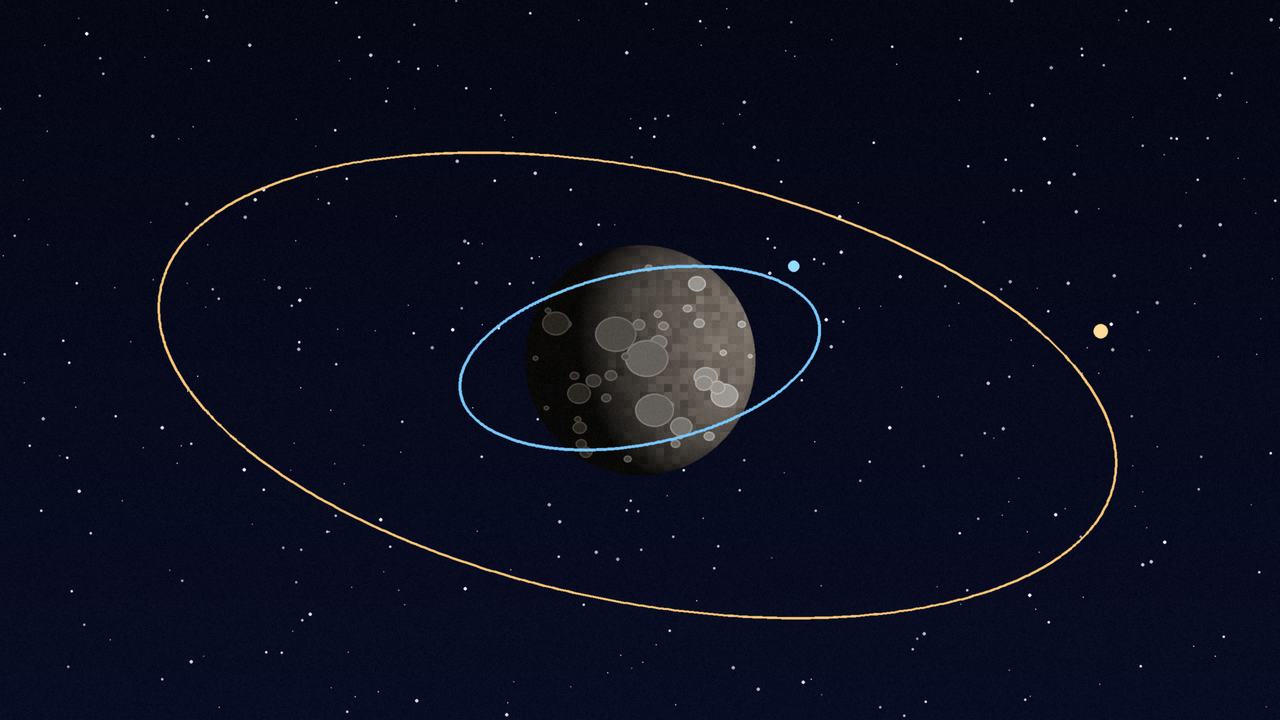
According to Space.com, the orbit-insertion burn was scheduled to begin at 18:24 GMT (9:24 p.m. in Riyadh) and to last about 37 minutes. ESA’s description of its official animation explains that the stacked spacecraft approached Mercury’s night side near the south pole, with four MPO thrusters braking the pair until the planet’s gravity captured it in an initial elliptical orbit of roughly 590 × 11,640 km.
Nature notes that BepiColombo is only the second mission to orbit the innermost planet, after NASA’s MESSENGER, which circled it from 2011 to 2015. Eos adds that the first visitor was Mariner 10, launched in 1973, which flew past without entering orbit. What is new this time is that two spacecraft will work in two different orbits around Mercury at the same time, a first in planetary exploration.
Why is Mercury harder to reach than Pluto?
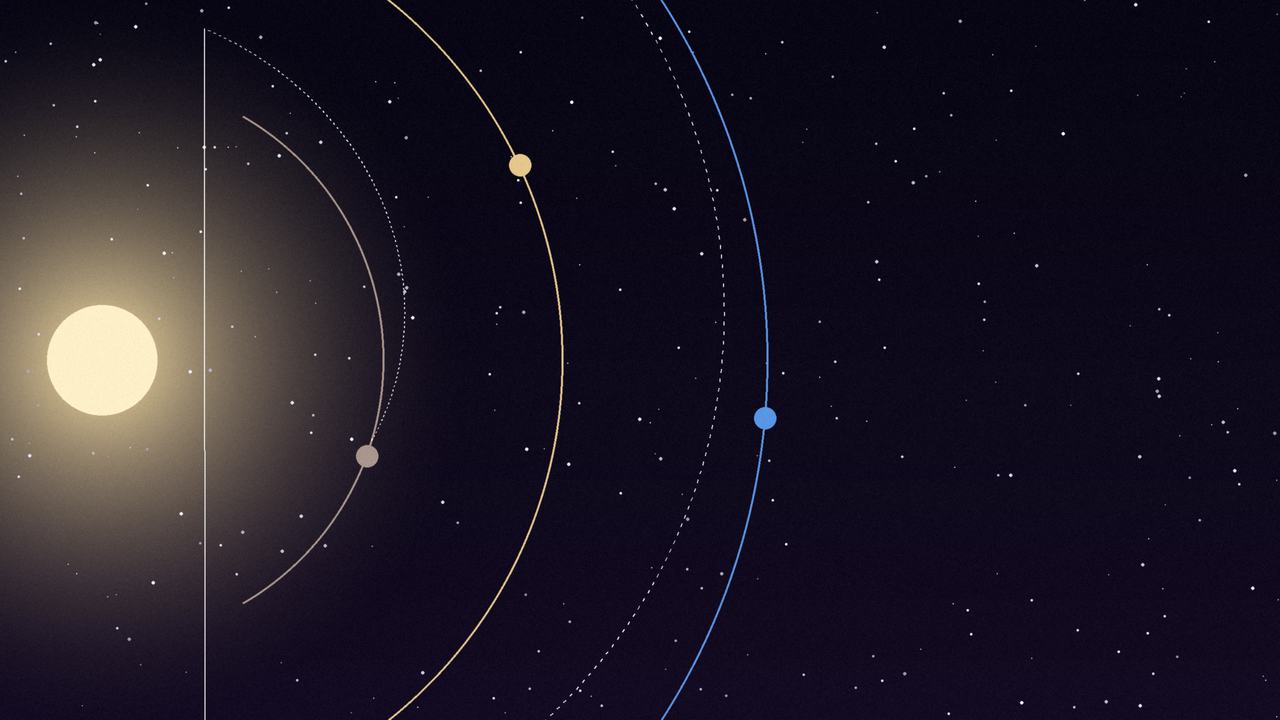
An eight-year trip to a planet that is, by solar-system standards, nearby sounds odd. The problem is energy, not distance. A spacecraft falling towards the Sun speeds up under its enormous pull, and Mercury’s weak gravity cannot catch a probe that arrives too fast. Eos quotes Azul Pinochet-Barros of ESA’s operations centre, speaking during the 3 September livestream: “Reaching Mercury is actually harder than reaching Pluto,” because the challenge is shedding enough energy to match Mercury’s path around the Sun.
That is why the mission flew a long chain of gravity-assist flybys: one of Earth, two of Venus and six of Mercury itself, as Space.com lists them. Each pass trimmed the spacecraft’s speed. BepiColombo had launched on an Ariane 5 from French Guiana in October 2018. In 2024 a fault in the electric propulsion stopped the thrusters from reaching full power, so the trajectory was redesigned and arrival slipped from December 2025 to November 2026, Eos reports.
Two spacecraft, two orbits, two jobs
For now the two orbiters are still joined. The timeline on ESA’s website sets out what comes next: Mio separates from MPO on 9–10 December 2026; MPO drops Mio’s sunshield on 16 December; a series of burns then brings MPO to its final science orbit on 10 March 2027; and the science phase begins on 6 April 2027. ESA cautions that exact dates may change for operational reasons.
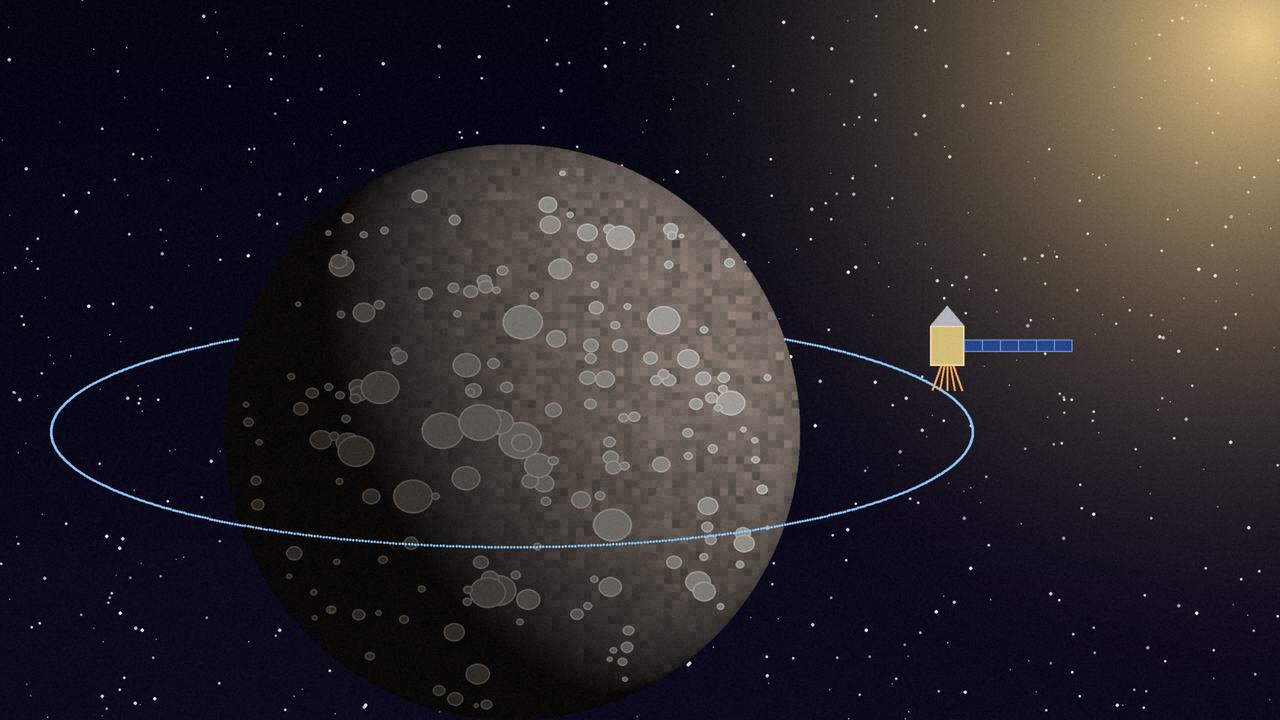
Nature reports that Mio will fly an elliptical orbit between about 500 and 11,000 km to study the magnetic field and its interaction with the solar wind, while MPO descends to an orbit of 400–1,500 km for continuous surface work. Eos explains that MPO will map surface composition, temperature and topography, measure the gravity field to size the core, and watch the planet’s thin exosphere. Mio tackles an old puzzle: what sustains Mercury’s magnetic field, and why does it appear offset from the planet’s centre?
The nominal mission lasts one year, with an extension planned through 2029, according to Eos. The Associated Press puts the total cost at about $2 billion (1.7 billion euros).
Instruments tested before arrival
The science teams did not wait for orbit insertion to check their hardware. On 15 September 2026 all MPO instruments were switched on together for the first time since the transfer module separated on 3 September, ESA’s official update page says. The BELA laser altimeter fired more than 700,000 pulses over 21.5 hours, its first full test since 2016 on the ground.
On 20 November the University of Leicester announced that the MIXS X-ray spectrometer had produced its first image, of the Crab Nebula some 6,500 light years away. The university describes MIXS as the first imaging X-ray telescope operating on a planetary mission and says its angular resolution came out slightly better than measured in the lab in 2015. Its later job is a global map of the atomic make-up of Mercury’s surface, read from X-rays that the rocks give off when solar X-rays strike them.
Timeline
- 1973 Mariner 10 launches; it becomes the first spacecraft to fly past Mercury.
- 2011–2015 NASA’s MESSENGER is the first mission to orbit Mercury.
- Oct 2018 BepiColombo launches from French Guiana.
- 2024 An electric-propulsion fault delays arrival from December 2025 to November 2026.
- 3 Sep 2026 The Mercury Transfer Module separates; MPO takes over steering.
- 21 Nov 2026 The stacked orbiters enter orbit around Mercury.
- 9–10 Dec 2026 Mio separates into its own orbit.
- 10 Mar 2027 MPO reaches its final science orbit.
- 6 Apr 2027 The science phase begins.
Why it matters to readers in the region (analysis)
This section is Vemetto’s editorial reading, not news. BepiColombo shows that the hardest part of space exploration is often not the launch but the long planning and the patience. The mission survived eight years, nine planetary flybys and a propulsion fault, and still arrived. For anyone following the young space programmes in the Gulf and the wider Arab world, the lessons are practical: a partnership between two agencies, rehearsals that deliberately include failures, and a mission broken into clear stages, each with its own date.
For students and teachers, Mercury now offers a ready-made lesson: why is it hard to get close to the Sun, how does a gravity assist work, and why does a small planet need two spacecraft? The next checkpoints are ESA’s media briefing on the arrival, announced for 27 November 2026, and the separation of the two orbiters in December. We will update this article if new official data are released.
Frequently asked questions
When did BepiColombo enter orbit around Mercury?
On Saturday 21 November 2026. The burn was scheduled to start at 18:24 GMT (9:24 p.m. Riyadh time) and last about 37 minutes, according to Space.com.
Why did the journey take eight years?
A spacecraft speeds up as it falls towards the Sun, so BepiColombo needed nine gravity-assist flybys to slow down, plus a one-year delay after a 2024 propulsion fault.
How do the two spacecraft differ?
ESA’s MPO studies the surface, composition, topography and gravity from a low orbit; JAXA’s Mio studies the magnetic field and plasma from a wide elliptical orbit.
Has the science mission started?
Not yet. Science is scheduled to begin on 6 April 2027, after the two orbiters separate and MPO reaches its final orbit.
Is this the first mission to Mercury?
No. Mariner 10 flew past and MESSENGER orbited from 2011 to 2015. What is new is two spacecraft working in two orbits at once.
Sources and verification
This explainer is written in Vemetto’s own words from ESA and JAXA pages, reporting by the Associated Press, Space.com, Nature and Eos, and the University of Leicester’s statement on the MIXS instrument. Every figure is attributed; the “analysis” section is editorial opinion.
- Official sources: ESA — orbit-insertion animation · ESA — arrival timeline · ESA — latest updates · ESA — 27 November briefing · JAXA — Mio mission
- Science and news reporting: Associated Press · Space.com · Nature · Eos (AGU) · University of Leicester — MIXS
About the illustrations
The three illustrations here were drawn in code for Vemetto: a cratered planet, two orbits and a spiral path around the Sun. They are not real pictures of Mercury or of the spacecraft and use no agency images or logos.