The short version: same host, same groups, a different winter
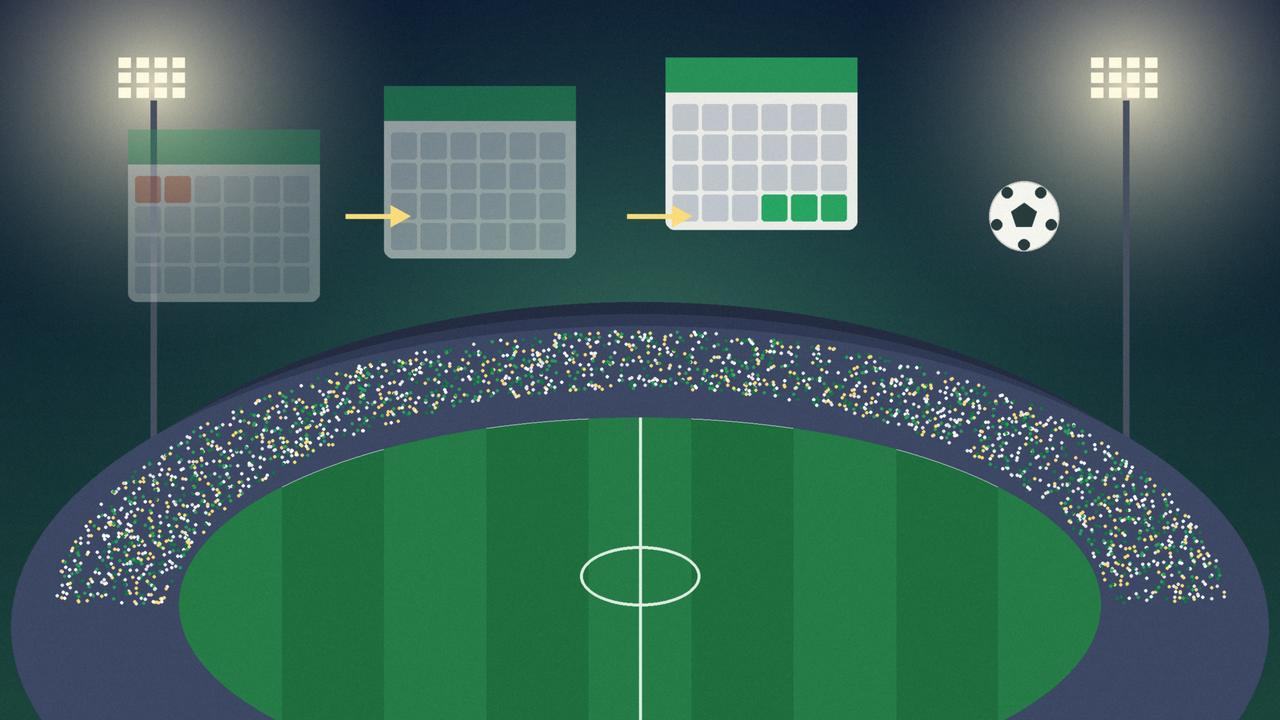
The next men’s AFC Asian Cup is still going to Saudi Arabia, the same 24 teams are still in it, and the groups drawn in Riyadh last May still stand. What has changed is the calendar. On Tuesday 3 November 2026 the Asian Football Confederation (AFC) announced that the tournament, which had been due to run from 7 January to 5 February 2027, will instead be played from 23 December 2027 to 21 January 2028. The kick-off has moved back by almost a full year, and the final now falls in a different calendar year from the one in the tournament’s name.
Ten days on, the practical consequences are becoming clearer. The Saudi Pro League has frozen a round of fixtures and opened a review of its whole season. The ticketing platform has told buyers that their tickets remain valid and set a deadline for refunds. National federations from Australia to Japan have published their own reactions. What has not happened yet is equally important. The new dates still need approval from FIFA, and the AFC has not issued a new match-by-match schedule.
For Arab readers the story matters more than usual. Eleven of the 24 qualified teams are Arab national sides, Saudi Arabia is hosting the competition for the first time, and the tournament was widely presented as a rehearsal for the 2034 FIFA World Cup in the Kingdom. This guide sets out what was officially decided and what is still pending. It then looks at the groups from an Arab point of view and at what the delay means for fans, clubs and the host. Facts come from the AFC, the Saudi Pro League and other named sources. Paragraphs marked Analysis are Vemetto’s editorial reading, and anything about the future is labelled as an expectation, not a certainty.
What exactly the AFC decided, and what it did not
The AFC’s statement was short and carefully worded. It was issued from the confederation’s headquarters in Kuala Lumpur after what it called extensive discussions and close consultation with two partners: the Local Organising Committee of the tournament and the Saudi Arabian Football Federation (SAFF). The decision itself was taken by the AFC’s Organising Committee for the Asian Cup, which approved the rescheduling. The reason given was “exceptional circumstances arising from developments in the region, including substantial logistical complexities and travel disruptions”. The statement did not name a specific incident, and it did not publish a risk assessment.
Three points in the announcement deserve attention. First, the tournament has been rescheduled, not relocated. The AFC continues to call it the AFC Asian Cup Saudi Arabia 2027 and says it will keep working with the local organisers, the participating federations, sponsors and broadcasters. Second, the confederation thanked SAFF and the organising committee for their commitment, which signals that the relationship with the host is intact. Third, the new window is formally a proposal. In the AFC’s words, the new dates “will be presented to FIFA for approval”. Football Australia’s statement the same day also described the tournament as proposed for the new dates “subject to FIFA approval”.
That last point is not a technicality. FIFA sets the international match calendar, which determines when clubs are obliged to release players to national teams. The original January–February 2027 dates had been built into that calendar. A tournament that starts two days before Christmas and runs into late January sits in a different part of the football year, especially for clubs in Europe. As of 13 November we found no public FIFA decision on the new window.
What the announcement did not do is just as useful to note. It did not publish new kick-off times or allocate matches to stadiums. It did not change the format, the list of venues or the draw. Anyone who saved the earlier fixture list should treat it as history, not as a plan, until the AFC releases a revised one.
Analysis. The language of the statement reads like a joint decision rather than one imposed on the host. The AFC stressed consultation with SAFF, praised its commitment and kept the Saudi branding. That fits what the AFC and the organisers had said in previous months, when they insisted preparations were on track. The choice of an almost twelve-month delay, rather than a few weeks, also suggests the organisers wanted enough room to avoid a second postponement.
Why now: the context behind “developments in the region”
The AFC kept its explanation general, but the news organisations that covered the decision placed it in a specific context. Reuters reported that the postponement followed attacks on the host country by Yemen’s Houthi movement. It said a strike on Riyadh’s international airport in October killed at least 12 people and wounded more than 300, the deadliest attack in Saudi Arabia in more than a decade. Later reports carried by Al Jazeera and the BBC put the death toll at 13. The BBC also noted that other events in the Kingdom had recently been called off. These included the Six Kings Slam tennis exhibition in Riyadh, and the Asian Tour indefinitely postponed its season-ending golf tournament, which had been scheduled for 18 to 21 November.
Football had felt the pressure before the decision. According to Reuters, an AFC Champions League Elite match in Riyadh between Al Nassr and the Emirati club Al Wasl was postponed in October. Saudi Arabia’s Civil Defence had issued a safety warning shortly before kick-off. The National reported that the same season’s club competition had already been reshaped once. Last season the Champions League Elite was cut short by the outbreak of the Iran war at the end of February, and its later rounds were played as a centralised finale in Jeddah. The Guardian added that teams scheduled to play friendlies in Saudi Arabia during the November international window had moved those matches elsewhere.
Before the postponement, organisers had projected confidence. The Associated Press reported in late October, when a finalised fixture list was published, that a spokesman for the local organising committee had told an AFC meeting that daily life was continuing in Saudi Arabia and that the Kingdom would be ready. Days later the calendar changed. AP described the Asian Cup as the biggest sports event postponed so far because of the conflict in the Middle East.
Analysis. Two forces seem to have pushed in the same direction. One was safety and logistics: moving 24 squads, officials, media and tens of thousands of visiting fans requires predictable flights and airports, and October’s attacks hit exactly that. The other was time. With the opening match less than ten weeks away, there was, as the Guardian put it, little appetite for another country to step in. Moving the dates kept the tournament in Saudi Arabia without asking the organisers to guarantee conditions that no one could promise in November.
The tournament in numbers: 24 teams, eight stadiums, three cities
The structure of the competition is unchanged by the delay. Twenty-four teams are split into six groups of four. Each team plays the other three once, giving 36 group matches. The six group winners, the six runners-up and the four best third-placed teams advance to a round of 16, followed by quarter-finals, semi-finals and a final. The AFC schedule published earlier this year shows no third-place play-off. By simple arithmetic, that means 51 matches in total.
In February 2026 the AFC and the local organisers set out the venue plan, which spreads the tournament across three cities and eight stadiums. Riyadh carries most of the load. The King Fahd Sports City Stadium, the largest venue with a capacity of 72,000, was chosen for both the opening match and the final. Four more Riyadh grounds complete the capital’s share. They are the King Saud University Stadium (26,000), the Kingdom Arena (26,000), the Imam Mohammed Ibn Saud University Stadium (25,000) and the Al Shabab Stadium (13,000).
Jeddah has two venues. The King Abdullah Sports City Stadium is the second-largest at 60,000 and was due to host a semi-final. The Prince Abdullah Al Faisal Sports City Stadium holds 26,000. The eighth venue is in Al Khobar in the Eastern Province. This is the new 45,000-seat Aramco Stadium, which the AFC described in February as nearing completion. It is scheduled to host matches at every stage except the final, including the first semi-final.

The tournament will be the 19th edition of the Asian Cup, according to Al Bayan, and the first ever hosted by Saudi Arabia, as The National noted at the time of the draw. The draw itself took place on Saturday 9 May 2026 at the historic Salwa Palace in the At-Turaif district of Diriyah, a UNESCO World Heritage site on the edge of Riyadh. It had first been set for 11 April. The last place in the field was settled on 4 June, when Yemen beat Lebanon 2-0 in the final round of qualifying.
Analysis. A concentrated venue plan is an advantage in uncertain times. Five of the eight stadiums are in one city, and the longest internal journey is the cross-country hop between Jeddah and Al Khobar. That is easier to secure and to plan around than a tournament spread across many regions. The extra eleven months may also help with the one venue that was still being finished, a point The National made when it noted the infrastructure benefits of the delay.
Eleven Arab teams: the groups through an Arab lens
The draw produced six groups, and Arab teams appear in every one of them. In total, 11 of the 24 finalists are Arab national teams: Saudi Arabia, Kuwait, Oman, Palestine, Bahrain, Jordan, Syria, Iraq, the United Arab Emirates, Yemen and Qatar. Here is the field as confirmed by the AFC.
Group A is entirely Arab: Saudi Arabia, Kuwait, Oman and Palestine. The AFC’s preview notes that the hosts are chasing a record-equalling fourth title. Kuwait, champions in 1980, missed the last two editions. Oman went out in the group stage in 2023, while Palestine reached the round of 16 for the first time at the last tournament. Several coaches told the AFC after the draw that the familiarity between Arab teams, who had met recently in World Cup qualifiers and at the FIFA Arab Cup, would make the group harder to predict. Under the original schedule, Saudi Arabia were to open the tournament against Palestine.
Group B brings together Uzbekistan, Bahrain, North Korea and Jordan. Jordan arrive as the 2023 runners-up and, like Uzbekistan, as World Cup debutants after qualifying for the 2026 finals. Group C has Iran, Syria, Kyrgyzstan and China. The AFC recalled that Syria reached the round of 16 for the first time in 2023 and went through the third qualifying round with a perfect record.
Group D pairs Australia, the 2015 champions, with Iraq, who won in 2007, plus Tajikistan and Singapore. The Guardian noted that Iraq reached their first World Cup in 40 years this year. Group E has South Korea, the United Arab Emirates, Vietnam and Yemen. Yemen secured the last place with two goals from Nasser Al Gahwashi against Lebanon. The AFC said Yemen topped their qualifying group with 14 points and are returning after missing the 2023 edition. Group F brings Japan, the record four-time winners, together with Qatar, Thailand and Indonesia. Qatar won the last two editions, in 2019 and in the tournament branded 2023, and the AFC noted they are trying to become only the second team to win three in a row.
Taken together, the groups give the Arab teams some favourable routes. Because four of the six third-placed teams also qualify, a single win plus a draw can often be enough to reach the knockout rounds. The last edition used the same format, and it was the one in which Jordan reached the final while Palestine and Syria reached the round of 16 for the first time.
Analysis. The postponement affects these teams unevenly. For federations rebuilding after the 2026 World Cup, such as Saudi Arabia, or working with new coaches, such as the UAE, an extra year is time to integrate new players. The National raised the UAE case specifically. For squads built around experienced players, a year can mean more injuries and older legs. Qatar, as two-time defending champions, could face exactly that question. We do not attempt to predict results here. Squads will change too much between now and December 2027 for any forecast to be honest.
Saudi Arabia as host: from Gulf Cup glory to a longer wait
The Green Falcons approach the tournament with a strong continental record and a recent boost. Saudi Arabia won the Asian Cup in 1984 in Singapore, in 1988 in Qatar and in 1996 in the UAE, as the Saudi encyclopaedia Saudipedia records. The AFC’s own history describes how the team reached five consecutive finals between 1984 and 2000, losing in 1992 to hosts Japan in Hiroshima and again to Japan in 2000. A fourth title would equal Japan’s record.
The recent boost came in October. On 6 October 2026, Saudi Arabia beat the UAE 2-0 in the final of the 27th Arabian Gulf Cup at King Abdullah Sports City in Jeddah, with goals from Hammam Al-Hammami and Firas Al-Buraikan. Al Jazeera reported that it was the Kingdom’s fourth Gulf Cup and its first since 2004. The same report recalled that the team had gone out of the 2026 World Cup in the group stage. At the time, the Gulf Cup win was presented as a foundation for the Asian Cup due three months later.
Hosting carries a wider meaning. Saudi Arabia will stage the 2034 FIFA World Cup, and The National described the Asian Cup as the first big stress test ahead of it. In recent seasons the Kingdom has hosted the final rounds of Asian World Cup play-offs, the last two editions of the Champions League Elite finals and the 27th Gulf Cup. The Asian Cup would be larger than all of them, with 24 national teams and the travelling fans that come with them.
Analysis. The delay changes the shape of that test rather than cancelling it. A December–January tournament still falls in the cooler months, which was the reason it was placed in winter in the first place. The extra year gives the Khobar stadium and the transport around it more time to settle. The risk is reputational. If the new dates also come under pressure, the questions now asked about 2027 will be asked more loudly about 2034. Organisers are likely to treat every intermediate event, from club finals to friendlies, as part of rebuilding confidence. That is an expectation on our part, not an announced plan.
Fans and tickets: what holders need to know
For supporters who had already bought tickets, the most concrete news came from the official ticketing platform, Ahlan. According to Ajel, which reported the platform’s announcement on X, tickets already purchased remain valid for the new tournament dates. No new ticket is needed. Holders who would rather have their money back can request a refund until 5 January 2027.
Ajel described a six-step online process. Holders open the refund link sent to their email, or the refund page on the platform, and log into their Ahlan account. They confirm their identity with a one-time code sent by email, SMS or WhatsApp and choose the tickets by order number. They then enter bank details, check the information and submit the request with a second verification code. The platform said refunds go back to the original payment method or, if that is not possible, to the bank account provided.

Other bookings are a different matter. Flights, hotels and hospitality packages bought for January 2027 are governed by their own terms. The AFC’s announcement did not set out any general compensation scheme for them, and none of the sources we reviewed reported one. Fans should check the conditions of each booking directly with the airline, hotel or agent.
Analysis. The refund deadline of 5 January 2027 falls more than eleven months before the new kick-off. Holders who are unsure whether they can travel in December 2027 have to decide well before the new match schedule is likely to be known. A sensible approach is to check whether your original match is likely to be similar under the new calendar, though no one can know that yet. Also consider whether school holidays, work leave and the year-end period suit you. If they do not, request the refund before the deadline. As with any ticketing step, use only the official platform and the link it sends you, and be wary of messages that claim to process refunds on its behalf.
Clubs and leagues: the calendar ripple
The first institution to react publicly was the Saudi Pro League. On the day of the AFC’s announcement it said Matchweek 13 of the Roshn Saudi League would be rescheduled. It described the step as part of a wider review of the 2026–27 fixture list, made possible because the revised Asian Cup dates create “additional flexibility in the domestic football calendar”. The league said the review would aim for a more balanced spread of matches over the rest of the season, with proper rest and recovery for players. It would also hold a workshop with clubs before confirming new dates.
The reason for that rethink was visible in the earlier calendar. The Saudi season had been planned so the league could pause for the original Asian Cup, which meant cramming matches into the hottest months. The National counted nine matches for Al Nassr between 15 August and 15 September, and 13 by the end of October. It said the club’s coach, Ange Postecoglou, had openly objected to the schedule. With the January pause gone, the league can now use those weeks to fit in postponed games and spread the load.

The ripple extends beyond Saudi Arabia. The National reported that the UAE Pro League quickly announced a revised fixture list for January and February, the weeks that had been reserved for the tournament. In Europe, clubs that expected to lose Asian internationals for several weeks of the current season will keep them. The BBC listed several Japanese players at English clubs who would probably have been called up. In Australia, Football Australia said the new dates mean the country’s qualifying campaign for the 2030 World Cup, starting in September 2027, will now come before the Asian Cup.
Analysis. As The National put it, the disruption has been deferred, not removed. A tournament from 23 December to 21 January lands in the middle of the 2027–28 season for most leagues in the Gulf, and during one of the busiest periods of the European club season, as the Guardian pointed out. Gulf leagues will need to plan another winter pause, and European clubs will face the release question a year later. Much now depends on how FIFA treats the new window in its international calendar. That will shape whether clubs are obliged to release players for the whole period.
A precedent: when the 2023 Asian Cup was played in 2024
This is not the first time an Asian Cup has been played on dates that do not match its name. The previous edition was awarded to China for 2023. It was later moved to Qatar because of the Covid-19 pandemic, and it was played in January and February 2024, as the BBC recalled. Qatar won that tournament, beating Jordan in the final, and still use the 2023 label for it. The rescheduled Saudi tournament will carry the 2027 name while its final is played in January 2028.
The difference is that in 2022 the hosting rights moved, while this time they have not. That matters for the region. A host change would have meant a new organising country, new venues and new travel plans for fans. A delay with the same host keeps the investment, the stadiums and the draw in place, at the cost of a longer wait. It also leaves the organisers a full year to show that the conditions behind the postponement are improving.
Analysis. The 2023-in-2024 experience shows that a tournament moved at short notice can still be completed and produce a worthy champion. It also shows how easily a label and its dates drift apart. Fans, travel planners and media should therefore quote the actual dates, 23 December 2027 to 21 January 2028, rather than relying on the “2027” in the name.
Timeline
- 1956 First men’s Asian Cup.
- 1984 · 1988 · 1996 Saudi Arabia’s three continental titles.
- Jan–Feb 2024 The “2023” Asian Cup is played in Qatar after moving from China because of the pandemic; Qatar win.
- Feb 2026 AFC unveils the eight-stadium, three-city venue plan.
- 9 May 2026 Final draw at Salwa Palace, Diriyah, after a postponement from 11 April.
- 4 Jun 2026 Yemen beat Lebanon 2-0 to take the last place.
- 6 Oct 2026 Saudi Arabia beat the UAE 2-0 in Jeddah to win the 27th Gulf Cup.
- Late Oct 2026 Final fixture list for the original dates published.
- 3 Nov 2026 AFC announces the rescheduling; the Saudi Pro League postpones Matchweek 13.
- 5 Jan 2027 Deadline for ticket refunds through Ahlan.
- Sep 2027 Australia’s 2030 World Cup qualifying begins, per Football Australia.
- 23 Dec 2027 Proposed opening day.
- 21 Jan 2028 Proposed final.
What to watch next
Several decisions will determine how the delay plays out. Some have clear owners and should come in the coming weeks or months. Others depend on the regional situation, which no sports body controls.
FIFA’s approval. The AFC has said the new window will be presented to FIFA. A formal decision, and the way it fits the international match calendar, will settle the club-release question and confirm the dates. Until then, the dates are the AFC’s proposal.
A new match schedule. The AFC has not yet published revised kick-off times and venue assignments. The group draw stands, but the day-by-day plan from earlier this year no longer applies. Expect a new document from the AFC and the local organising committee. We have not seen a date announced for it.
The Saudi league calendar. The Saudi Pro League has promised new dates for Matchweek 13 once its review with clubs is complete. The revised fixture list for the rest of 2026–27 will show how the league uses the January weeks it has regained.
Ticket decisions. Holders have until 5 January 2027 to request a refund through Ahlan. Tickets that are not refunded remain valid for the new dates.
National team plans. Federations will adjust their preparation programmes, friendlies and, in Asia, their schedules for the 2030 World Cup qualifiers, which Football Australia said begin in September 2027.
Analysis. Our working expectation, which is not a prediction of events, is that the AFC will try to keep as much of the original plan as possible. That means the same venues, the same pairings for the opening match and a similar rhythm of three group matchdays. Doing so would make the transition simpler for fans and broadcasters. The biggest uncertainty is outside football. The AFC’s statement tied the delay to developments in the region, and its December 2027 dates rest on the expectation that travel and logistics will be more predictable by then. If that expectation holds, Saudi Arabia will host Asia’s biggest national-team tournament for the first time at the turn of 2028. If it does not, the question will return to the AFC’s table.
We will update this guide when FIFA rules on the dates and the AFC publishes its new schedule. Until then, the safest summary is the one the AFC gave: same tournament, same host, new dates, still awaiting FIFA approval.
Frequently asked questions
What are the new dates of the Asian Cup in Saudi Arabia?
23 December 2027 to 21 January 2028, instead of 7 January to 5 February 2027. The AFC announced the change on 3 November 2026 and said the new dates will be presented to FIFA for approval.
Has the tournament been moved out of Saudi Arabia?
No. It has only been rescheduled. The AFC still calls it the AFC Asian Cup Saudi Arabia 2027 and says it will keep working with the local organising committee and the Saudi Arabian Football Federation.
Why was it postponed?
The AFC cited exceptional circumstances arising from developments in the region, including substantial logistical complexities and travel disruptions. Outlets including Reuters and the BBC linked the decision to Houthi attacks on the Kingdom, among them an attack on Riyadh’s airport in October.
Have the groups changed?
No. The draw made on 9 May 2026 stands. Group A is Saudi Arabia, Kuwait, Oman and Palestine, and 11 of the 24 teams are Arab. A new day-by-day match schedule is still to be published.
What should I do with my ticket?
According to the Ahlan platform, as reported by Ajel, tickets remain valid for the new dates with no action needed. Holders who want a refund can apply online until 5 January 2027; money goes back to the original payment method or to the bank account provided.
How does the delay affect the Saudi Pro League?
The league postponed Matchweek 13 and opened a full review of the 2026–27 fixture list, including a workshop with clubs, to spread matches more evenly and protect player recovery.
Where will the matches be played?
In eight stadiums: five in Riyadh, led by the 72,000-capacity King Fahd Sports City Stadium for the opener and final; two in Jeddah, led by King Abdullah Sports City (60,000); and the new 45,000-seat Aramco Stadium in Al Khobar.
Sources and verification
The wording of this guide is Vemetto’s own. It relies on official statements from the AFC, the Saudi Pro League and Football Australia, and attributes everything else to the outlet that published it. Direct quotations are limited to short phrases from the AFC, Saudi Pro League and Football Australia statements. Sections marked “Analysis” are editorial reading, not news.
- Asian Football Confederation: Rescheduling statement (3 Nov 2026) · Venue plan and original schedule (Feb 2026) · The groups · Coaches after the draw · Yemen complete the field · Saudi Arabia’s great teams of the 1980s–90s
- Other official sources: Saudi Press Agency (Arabic) · Saudi Pro League: Matchweek 13 rescheduled · Football Australia statement · Saudipedia: Saudi national team titles
- Arab media: Al Jazeera Arabic · Al Bayan · Ajel: tickets and refunds
- International reporting: Reuters · AP: the postponement · AP: final schedule before the delay · BBC Sport · The Guardian · Al Jazeera: Saudi league postpones matches · Al Jazeera: Saudi Arabia win Gulf Cup 27 · The National: effect on clubs · The National: breathing space for the SPL · The National: draw results
About the images
We drew the five pictures in this article in code at Vemetto: a night stadium, an abstract map, small pitches, blank tickets and a balance. They show no player or other real person and no tournament, federation or club emblem, and we used no match footage, agency photo or image taken from another website.